Are there water purifier manufacturers in Vietnam?
You’re exploring Vietnam to lower costs, but you fear that production delays and inconsistent quality could ruin your launch schedule. I can provide a clear view based on real-world supply chain events.
Yes, there are water purifier manufacturers in Vietnam, many established by Chinese companies. While they offer cost advantages, buyers should be aware of potential challenges with production consistency and meeting strict delivery schedules, especially for complex or urgent orders.
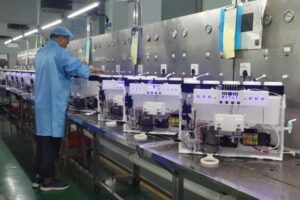
The shift in manufacturing locations is a direct result of global economic changes. For a buyer like you, Phil, understanding the reasons behind this move is the first step. It helps in evaluating if Vietnam is the right choice for your specific product line. Let’s explore why this trend is happening and what it means for your business.
Why are Chinese factories moving to Vietnam?
You see manufacturing costs rising and tariffs creating uncertainty. These factors pressure your budget and force you to look for alternative production hubs. I understand this pressure because I manage these same challenges from the factory side.
The primary reasons are the U.S.-China tariff war and increasing labor costs in China. By relocating production lines to Vietnam, Chinese companies can offer more competitive pricing. They often send experienced engineers and quality control staff to guide the new operations.
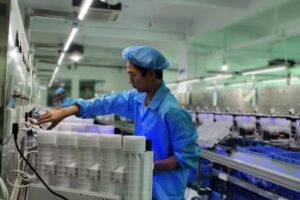
As an experienced buyer, you know that a lower price on paper does not always mean a lower total cost. The move to Vietnam is a strategic response to macroeconomic pressures. However, transplanting a factory involves more than just moving machines. It involves training a new workforce and adapting to a different business culture. While the core technical expertise often comes from the parent company in China, the day-to-day execution depends on the local team. For you, this means it is critical to investigate how a Vietnamese factory manages its production lines, maintains quality standards inherited from its Chinese counterpart, and handles workforce integration. This background information is essential before you commit to any production.
Comparing Manufacturing Environments
This table gives you a clear, high-level comparison between the established Chinese manufacturing ecosystem and the emerging one in Vietnam.
| Factor | Mainland China | Vietnam |
| Supply Chain | Highly mature and integrated. | Developing, often relies on imported components. |
| Labor Costs | Higher and increasing. | Lower, but with varying skill levels. |
| Tariff Impact (U.S.) | Subject to higher tariffs. | Generally lower or no tariffs. |
| Production Stability | Very high and predictable. | Can be inconsistent; subject to local factors. |
| Lead Times | Shorter and more reliable. | Longer and less predictable, especially for new factories. |
What are the real risks of manufacturing in Vietnam?
You need your products delivered on time, every time. A missed shipment for a key sales season like Christmas can be a disaster. I’ve seen clients face this exact problem when they prioritize cost over predictable delivery.
The main risk is production instability, which can lead to significant delivery delays. Local labor habits can be a factor, sometimes affecting workforce availability and efficiency. This makes it difficult for factories to guarantee that they can meet tight deadlines for urgent orders.
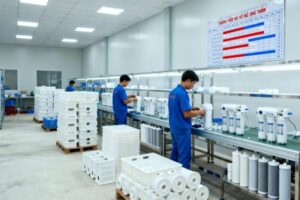
I can share a direct experience about this. A British client of mine, let’s call him Ben, placed an order for 300 RO water purifiers with a factory in Vietnam. He needed them shipped by September to be in U.K. stores for Christmas. Around September 20th, the goods had not shipped yet. When Ben contacted the factory, he discovered that the workers’ production efficiency was too low to meet the schedule. The situation became critical. The order had to be urgently transferred to a factory in mainland China to rescue the timeline. We managed to complete the production, but it was a stressful experience for everyone. This story highlights a critical point for a technical buyer like you: a factory’s capability is not just about its machines, but about its process control and labor management.
Key Risks and How to Mitigate Them
Understanding the risks is the first step. Here is how you can proactively manage them when considering a Vietnamese supplier.
| Risk Category | Specific Challenge in Vietnam | Your Mitigation Strategy |
| Production & Labor | Unpredictable worker attendance and efficiency affecting output. | Verify the factory’s management system. Ask for data on past performance. |
| Supply Chain | Reliance on imported raw materials and components causes delays. | Confirm the supplier for key components. Ask about their buffer stock policy. |
| Quality Control | Inconsistent execution of QC protocols by new teams. | Request reports from the parent company. Plan for more frequent third-party inspections. |
| Communication | Language and cultural barriers leading to misunderstandings. | Ensure you have a dedicated, English-speaking contact with technical expertise. |
How can I balance cost savings with supply chain risk?
You are under pressure to reduce costs, but not at the expense of quality or reliability. Finding the right balance is the key to protecting your brand and your bottom line. I work with clients every day to build this exact type of balanced strategy.
A blended sourcing strategy is the most effective approach. Use Vietnamese factories for simpler, high-volume, and non-urgent products where you can afford longer lead times. Keep production of complex, high-value, or time-sensitive orders with established, reliable factories in mainland China.
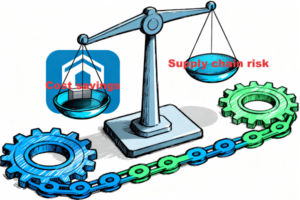
After his difficult experience, my client Ben adopted this exact strategy. He now places the majority of his orders, especially for new or advanced RO systems, with experienced factories in China. He can trust that we will meet the tight deadlines and precise technical specifications his brand requires. At the same time, he allocates orders for his simpler, standard filter models to his Vietnamese partner. This allows him to benefit from lower costs on products where the production process is routine and the delivery schedule is more flexible. This hybrid approach gives him the best of both worlds: cost reduction without compromising the reliability of his most important product lines. For a buyer with an engineering background like you, Phil, this strategic allocation of resources based on product complexity and urgency is a logical and powerful way to manage your supply chain.
Building Your Hybrid Sourcing Model
A smart sourcing model categorizes products based on risk and value. This allows you to make informed decisions about where to place each order.
| Product Category | Recommended Sourcing Location | Rationale |
| New & Complex Models | Mainland China | Access to advanced R&D, experienced engineers, and a reliable supply chain. |
| Urgent & Time-Sensitive Orders | Mainland China | Predictable production schedules and faster logistics ensure on-time delivery. |
| High-Value Products | Mainland China | Mature quality control systems minimize defects and protect brand reputation. |
| Simple, Standard Products | Vietnam | Lower labor costs provide a clear financial benefit on less complex items. |
| High-Volume, Routine Orders | Vietnam | Ideal for products with flexible delivery dates and established production processes. |
Conclusion
Vietnam offers cost advantages for manufacturing. However, a blended strategy that leverages both Vietnamese and Chinese factories is the safest way to balance cost, quality, and supply chain reliability.