Sourcing from China offers cost benefits, but quality is your biggest concern. A bad supplier could ruin your brand’s reputation. I will show you how to navigate this.
Define your technical needs first. Then, vet suppliers on B2B platforms, attend trade shows like Aquatech, or partner directly with a manufacturer. For a professional buyer, direct partnership and rigorous testing are the most secure paths to ensure quality.
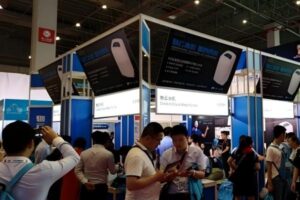
As an engineer yourself, Phil, you know that technical specifications are everything. Sourcing from thousands of miles away requires a process that goes beyond just looking at a price list. It demands a systematic approach to finding and verifying a partner who understands quality as you do. The goal is to build a relationship that guarantees product reliability for the next 5-10 years. Let’s break down the common sourcing channels and how a professional should approach each one.
Should you start your search on B2B platforms like Alibaba?
B2B sites offer millions of suppliers, but finding a truly reliable one feels overwhelming. You worry about unverified claims and inconsistent quality. I can help you filter the noise.
Use B2B platforms as a discovery tool, not a final purchasing decision. Screen for suppliers with long histories, multiple certifications (NSF, WQA), and detailed factory audits. Always request samples for independent verification before any commitment.
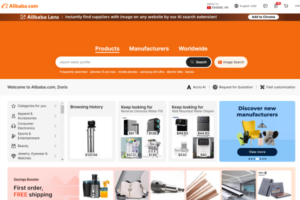
A platform like Alibaba is a massive directory. Your engineering background is your best tool here to separate serious manufacturers from trading companies or workshops with impressive marketing. Don’t focus on the product photos. Go straight to the company profile and technical data. Look for suppliers who have been operating for over a decade and transparently share their certifications and factory audit reports, like BSCI or ISO9001. A “Gold Supplier” status for many years indicates a stable business, but it is not a direct guarantee of product quality. The next step is to initiate a technical conversation. Ask specific questions about their RO membrane sourcing, carbon block micron rating, or QC testing procedures. Their answers will quickly reveal their level of expertise. Use the platform to create a shortlist of 5-10 potential partners, then move to the verification stage.
Professional Vetting Checklist for B2B Platforms
| Verification Point | What to Look For | Potential Red Flag |
| Certifications | Valid NSF, WQA, CE, ISO9001 certificates. | Vague claims of “meeting standards” without documents. |
| Factory Audits | Recent BSCI or similar third-party audit reports. | Unwillingness to share audit results. |
| Technical Specs | Detailed data sheets for all components. | Using marketing terms instead of technical data. |
| Communication | Sales staff who can answer engineering questions. | Generic answers; unable to discuss technical details. |
Is partnering directly with a manufacturer a better option?
Direct partnership offers control, but how do you find the right factory? You worry about communication barriers and verifying their capabilities from afar. Let me share a story.
For maximum quality control and cost-effectiveness, direct partnership is the best path. It allows you to inspect production lines, verify cleanroom standards, and build a long-term relationship. This is the model that ensures your brand’s reputation is protected.
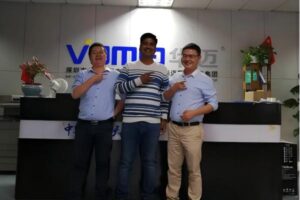
I can tell you about a client of mine, a French water treatment engineer. He was dealing with severe hard water issues in his hometown, causing constant scaling problems. He searched across Europe but couldn’t find an efficient and cost-effective solution. He decided to visit a water exhibition in Shanghai and came across our products. He discussed his long-standing issues with my engineers right there at our booth. After he returned to France, we sent him filter samples. In his own company’s lab, he conducted rigorous tests, evaluating our desalination rate and filter lifespan. The results were clear: our performance exceeded many European brands, and the cost advantage was significant. This data prompted him to book a flight to China immediately. He came to our factory, where he personally inspected our production lines and cleanrooms. He witnessed our manufacturing process firsthand. In the end, he decided to partner with us and is now our successful distributor in France.
How Direct Partnership Protects Your Brand
| Advantage | Why It Matters for a Buyer Like You |
| Total Quality Control | You can walk the production line, verify raw materials, and oversee QC processes. |
| Technical Collaboration | Your engineering team can work directly with the factory’s R&D on improvements. |
| Cost Efficiency | Eliminating middlemen provides the best possible unit cost without sacrificing quality. |
| Supply Chain Transparency | You know exactly where your components come from and can ensure consistency. |
| Long-Term Stability | A strong factory relationship secures your supply chain for years to come. |
When should you use local brands or distributors?
You need products quickly or in smaller quantities, but you are not ready for a direct factory relationship. You are concerned about the extra costs and limited customization options.
Working with local Chinese brands or large distributors is ideal for market testing, smaller initial orders, or accessing a wide variety of products without a large commitment. It trades higher unit costs for speed and flexibility.
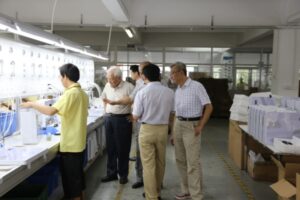
Using a local distributor or an established Chinese brand’s export department can be a smart strategic move, especially in the early stages of entering a market. These entities act as aggregators. They have already vetted multiple factories and consolidated their products into a single catalog. For a buyer like you, this saves a significant amount of time in the initial search phase. You can place a mixed container order with various product types from one source. The trade-off is a higher unit cost and less control over the product’s design and component-level quality. This channel is excellent for understanding what sells in your market without committing to a massive single-product order from a factory. Once you identify a bestseller, you can then use that sales data to justify a larger, more cost-effective order directly with a manufacturer like us. It is a lower-risk stepping stone to a full-scale direct sourcing strategy.
Sourcing Channel Strengths and Weaknesses
| Sourcing Channel | Strengths | Weaknesses | Best Use Case |
| Direct from Factory | High control, best cost, customization. | High MOQ, longer lead times. | Scaling a proven product line. |
| Distributor/Local Brand | Low MOQ, speed, product variety. | Higher cost, less control, no customization. | Market testing, filling product gaps. |
| B2B Platform | Huge selection, supplier discovery. | High risk, intensive vetting required. | Initial research and shortlisting. |
Conclusion
To source water filtration systems from China, define your needs, use platforms for research, and partner directly with a verified manufacturer for the best quality, control, and long-term success.