Are you worried about the quality of your tap water? Harmful contaminants can be invisible. A whole house filter provides a complete solution for every faucet in your home. The best whole house water filter for 2026 is not a single product. It is a customized system designed for your specific water source. This usually includes a sediment pre-filter, a primary carbon or RO filter, and sometimes a water softener or UV sterilizer for full protection.
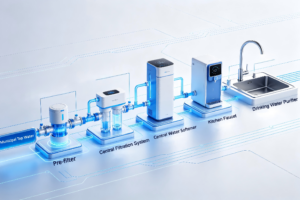
Choosing the right system can feel complex. I have seen many customers get confused. Let’s break down the essential components. This will help you understand what your home truly needs.
Should a Sediment Pre-Filter Be Your First Step?
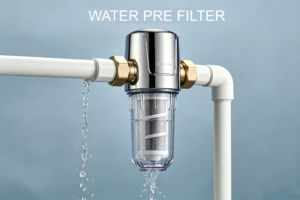
Do you see particles or cloudiness in your water? This sediment damages your pipes and appliances. A pre-filter is the simple, essential first defense for your entire system. Yes, a sediment pre-filter should always be the first component in any whole house system. It protects more expensive filters from clogging with sand, silt, and rust. This simple part extends their lifespan and keeps the whole system running efficiently, saving you money.
Why It’s Non-Negotiable
From my time on the factory floor assembling these systems, I can tell you the pre-filter is the unsung hero. It is a low-cost part that does a very important job. Without it, the main filter, whether it’s a carbon block or an expensive RO membrane, would clog up in months, not years. This would cause water pressure to drop and filtration performance to fail. The pre-filter is like an offensive line in American football; it protects the valuable players behind it. It takes the biggest hits from large particles so the specialized filters can focus on removing the microscopic contaminants they were designed for. Skipping this step is the most common mistake I see people make, and it is always a costly one.
Choosing the Right Micron Rating
The effectiveness of a sediment filter is measured in microns. A smaller micron rating means it can capture smaller particles.
| Micron Rating | Captures Particles Like | Best For |
| 50 Microns | Coarse Sand, Debris | Basic protection for well water |
| 20 Microns | Fine Sand, Silt | Standard for most city water |
| 5 Microns | Rust, Scale, Mold | High-purity applications, better protection |
| 1 Micron | Very Fine Silt, Cysts | Ultimate sediment protection before RO/UV |
Is a Whole House RO System a Smart Investment?
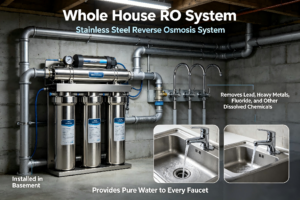
Are you concerned about dissolved chemicals like chlorine or lead? These affect your water’s taste and your health. A whole house RO system offers the most complete purification available. A whole house Reverse Osmosis (RO) system is a powerful investment for removing up to 99% of all contaminants. This includes chlorine, heavy metals, and fluoride. It provides truly purified water from every tap, which is ideal for those with serious water quality concerns.
My Experience with a U.S. Client
I remember a client from the U.S. who was building a new villa. He first asked for a simple UF filter. But I knew that for a new home, he needed a complete system. We discussed his needs. He wanted chlorine-free water for his showers, so I suggested a system with a pre-filter, a stainless steel RO unit, and a water softener. He also mentioned he drinks a lot of coffee. So, we added a wall-mounted instant hot water dispenser for convenience. The total cost, including shipping, was around $3,000. He was shocked. In the U.S., just the stainless steel RO unit would cost him nearly $4,000. He sent me a video after the installation and was extremely happy. It has been over two years, and we still have a great relationship, reminding him when it is time to replace his filters.
Key Considerations
A whole house RO system is not for everyone. It produces some wastewater during the purification process and requires a large storage tank. However, for providing the highest level of purity at every point in the house, nothing compares.
| Feature | Whole House RO | Whole House Carbon |
| Contaminant Removal | Removes up to 99% of everything | Removes chlorine, chemicals, bad taste |
| Removes Minerals | Yes, removes all dissolved solids | No, leaves healthy minerals in |
| Wastewater | Yes, has a brine line | No wastewater |
| Best For | Ultimate purity, specific health needs | Improving taste and safety of city water |
Do You Really Need a Water Softener for Your Home?
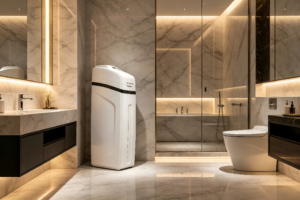
Are you tired of soap scum on your shower doors and spotty dishes? Hard water is the problem. It slowly damages your appliances. A water softener solves this issue. You need a water softener if your water tests high for calcium and magnesium. It is not a filter but a conditioner. It prevents scale buildup that harms your water heater, dishwasher, and pipes. It also improves how soap lathers and leaves your skin feeling softer.
How It Protects Your Home
As an engineer and manufacturer, I see a water softener as insurance for your home’s plumbing and appliances. Hard water minerals crystallize when heated. This creates a rock-like scale inside your water heater, making it work harder and eventually fail. The same scale clogs showerheads and faucets. I have personally taken apart appliances ruined by scale. A water softener uses a process called ion exchange. It swaps the “hard” minerals for “soft” sodium ions. This does not purify the water, but it makes the water “wetter” and prevents all scale-related damage. It is a crucial component in any complete system where hard water is present.
Salt-Based vs. Salt-Free
There are two main types of systems to deal with hard water. Understanding the difference is key to making the right choice.
| System Type | How It Works | Maintenance | Effectiveness |
| Salt-Based Softener | Ion Exchange (removes minerals) | Add salt bags periodically | Very effective, truly soft water |
| Salt-Free Conditioner | Template Assisted Crystallization (conditions minerals) | No salt, virtually no maintenance | Prevents scale, but water remains hard |
When Is a UV Purifier Necessary for Your Water?
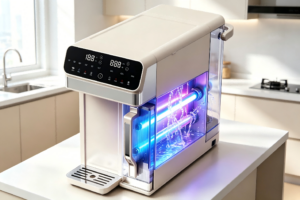
Do you use well water or live in an area with frequent boil alerts? Your water could contain harmful microorganisms. A UV purifier neutralizes them without adding any chemicals. A UV purifier is necessary if your water source is biologically unsafe, such as from a private well. It is also a good final barrier against bacteria and viruses from a municipal supply. It uses ultraviolet light to destroy their DNA, making the water completely safe to drink.
A Chemical-Free Barrier
A UV purifier offers peace of mind. It is a physical process, not a chemical one. The water flows through a steel chamber where it is exposed to a powerful UV-C light. This light instantly scrambles the DNA and RNA of bacteria, viruses, and cysts. This makes them unable to reproduce and cause illness. The process is safe and highly effective. It does not change the taste or odor of the water. From a product development standpoint, I admire its simplicity. There are no chemicals to store and no complex parts to break. It is a reliable technology that acts as a final firewall for your family’s health, especially if you are not 100% confident in your water source.
Installation and Maintenance
UV systems are installed “in-line” on your main water pipe, usually as the very last step after all other filters.
| Comparison | UV Purification | Chlorination |
| Method | Uses UV light | Adds chlorine chemical |
| Taste & Odor | No change | Adds a chlorine taste/smell |
| Effectiveness | Kills 99.99% of microorganisms | Effective, but some cysts are resistant |
| Byproducts | None | Can create harmful disinfection byproducts |
Why Add a Point-of-Use System to a Whole House Filter?
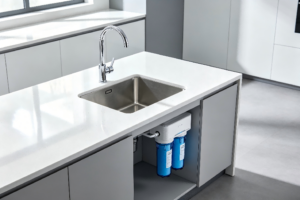
Your whole house system is working, but do you need instant hot, extra-pure water for tea? A point-of-use system offers this specialized convenience right where you need it most. Adding a point-of-use (POU) system, like an under-sink RO unit or an instant hot water dispenser, gives you specialized benefits. It can offer an even higher degree of filtration for drinking water or add convenience that a whole-house system alone cannot.
The Best of Both Worlds
Think of it this way: a whole house system provides a great baseline of clean, safe water everywhere. It protects your house. A POU system provides perfection for consumption. This is a strategy I often recommend. For my American client with the new villa, the whole house RO provided excellent water to his entire home. But the wall-mounted dispenser in his kitchen gave him 98°C purified water instantly for his coffee. It was a small addition that had a big impact on his daily life. You can use a similar approach. An under-sink RO filter can remove the last traces of contaminants for the purest drinking water, while the whole house system handles the bigger job of protecting your showers and laundry.
Completing Your System
This combination approach is both effective and economical. It ensures you have the right quality of water for the right purpose.
| Water System | Primary Benefit | Use Case |
| Whole House | General protection for the entire home | Chlorine-free showers, appliance protection |
| Point-of-Use | Specialized function, ultimate purity | Cooking, drinking water, instant hot beverages |
How Do You Customize a System for Your Home’s Needs?
Are you confused by all the options? Buying a pre-packaged kit might not solve your specific water problems. A custom approach ensures you get exactly what you need without paying for what you don’t. To customize a system, first get your water tested to identify your exact contaminants. Based on the report, you can select the right components in the right order. This data-driven approach is the only way to guarantee a perfect solution for your home.

The Vamia Process
My belief, born from years of making these products, is that we must start with the water itself. A doctor would not prescribe medicine without a diagnosis. We should not choose a filter without a water report. Once we know what is in your water, building the system is straightforward. We start with a sediment filter for large particles. Then we add a main filter, like activated carbon for chemicals or RO for total dissolved solids. If the report shows high mineral content, we add a softener. If it shows bacteria, we add a UV purifier at the end. This methodical process ensures every component has a purpose. It is the most honest and effective way to build a water system.
Your Water Report Is Your Roadmap
Your local utility or an independent lab can provide a detailed water report. This will be your guide.
| Common Water Problem | Corresponding Solution |
| Sediment, Sand, Rust | Sediment Pre-Filter |
| Chlorine, Bad Taste, Odor | Activated Carbon Filter |
| Heavy Metals, Fluoride, TDS | Reverse Osmosis (RO) System |
| Hardness, Scale Buildup | Water Softener |
| Bacteria, Viruses, Cysts | UV Purifier |
Conclusion
The best water filter is a complete system. It must be tailored to your water. This protects your health, your home, and gives you peace of mind.