The market is flooded with filter options, each making big claims. This creates confusion and the risk of choosing an ineffective system. You need clarity on which technologies actually perform. The answer lies in proven, specialized filters working together.
Truly effective water purification filters are PP sediment filters, activated carbon blocks, Reverse Osmosis (RO) membranes, and UV sterilizers. Each targets specific contaminants: particles, chemicals, dissolved solids, and microorganisms. A combination of these provides comprehensive protection.
Knowing the names isn’t enough. Let’s examine how each one works, its real purpose, and why sequence matters in building a reliable system.
Which Filters Best Remove Particles and Sediment?
A filter that clogs in weeks is frustrating. Cloudy water means particles are slipping through, damaging downstream filters. You need a robust first line of defense. Simple, mechanical filters solve this by catching debris upfront.
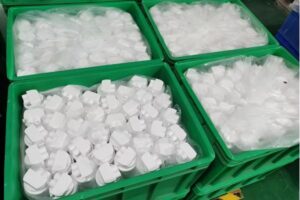
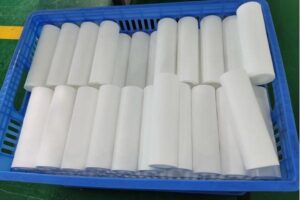
For removing particles, PP (polypropylene) sediment filters and ceramic filters are most effective. PP filters trap sand, silt, and rust. Ceramic filters use a micro-porous surface to block even bacteria. Both act as physical barriers without chemicals.
The Role of Mechanical Pre-Filtration
Think of these as the gatekeepers. Their primary job is to protect the more expensive and delicate filters that come after. In my years on the assembly line, I learned that skipping a quality sediment filter is the fastest way to ruin an RO membrane. It’s a simple, cost-effective layer of insurance.
| Filter Type | Mechanism | Best For | Key Limitation |
| PP Sediment Filter | Depth filtration through dense spun fibers. | Rust, sand, silt, and other suspended solids. | Does not remove chemicals, metals, or bacteria. Must be replaced regularly. |
| Ceramic Filter | Surface filtration through tiny pores (often 0.2-1 micron). | Bacteria, cysts, and fine sediment. | Pores can clog. Requires periodic cleaning. Does not remove dissolved contaminants. |
PP filters are workhorses. They come in different micron ratings (like 5 or 1 micron). A lower number catches smaller particles. Ceramic filters offer a higher level of particle removal, including some pathogens, making them excellent for biologically risky water sources. Neither alters water chemistry.
How Do We Eliminate Bacteria and Viruses Safely?
Physical filters may miss the smallest pathogens. The thought of invisible microbes in your drinking water is unsettling. Chemical disinfectants can leave bad taste. You need a reliable kill step. UV light and certain membranes provide this safety.
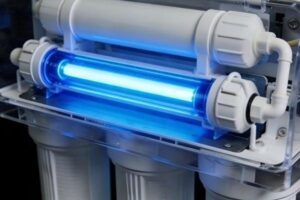
To eliminate bacteria and viruses, UV (Ultraviolet) sterilizers and Reverse Osmosis membranes are highly effective. UV light disrupts microbial DNA, killing 99.99% of pathogens without chemicals. RO membranes physically block viruses and bacteria due to their extremely small pore size.
Ensuring Microbiological Safety
This is the non-negotiable step for truly potable water. UV is a brilliant technology. I always recommend it for any non-municipal water source. It’s a final safeguard. However, the water must be clear for UV to work properly—another reason the sediment pre-filter is so important.
| Technology | How It Works | Pros | Cons |
| UV Sterilizer | Exposes water to ultraviolet light, destroying microbial DNA. | Chemical-free, instant, doesn’t alter taste or pH. | Requires clear water and electricity. Provides no residual protection. |
| RO Membrane | Forces water through a semi-permeable membrane (~0.0001 micron). | Removes viruses, bacteria, and most dissolved contaminants. | Produces wastewater, requires pre-filtration and often a pump. |
UV is a pure disinfection step. It doesn’t filter out the dead organisms, but it renders them harmless. RO, on the other hand, is primarily a filtration process that achieves disinfection as a result of its fine pores. For maximum safety in an off-grid setting, using both is the gold standard.
What Removes Chemicals, Metals, and Improves Taste?
Your water might be clear and microbe-free but still smell like chlorine or contain lead. These contaminants affect health and make water unpleasant to drink. Addressing this requires a different filtration mechanism. Adsorption is the key.
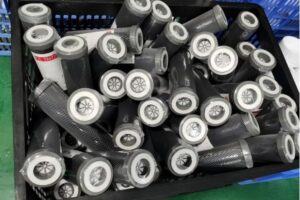
Activated carbon filters are the most effective for removing chemicals, chlorine, and bad tastes. They work by adsorption, where contaminants stick to the carbon’s vast surface area. For removing dissolved metals and salts, a Reverse Osmosis membrane is necessary.
Targeting Dissolved and Aesthetic Contaminants
This is where water goes from safe to enjoyable. Activated carbon is amazing. I’ve tested hundreds of samples, and the difference in taste before and after a good carbon block is night and day. It’s often used both before an RO membrane (to protect it from chlorine) and after (to polish the taste).
| Contaminant Type | Most Effective Filter | How It’s Removed | Note |
| Chlorine, VOCs, Bad Odors | Activated Carbon | Adsorption onto carbon surface. | Greatly improves taste and smell. Cartridge lifespan depends on water usage and contamination level. |
| Heavy Metals (Lead, Mercury), Dissolved Salts, Fluoride | Reverse Osmosis Membrane | Physical separation by size and charge. | RO is the broadest solution for inorganic contaminants. It produces highly purified water. |
It’s important to know that standard carbon filters do not effectively remove heavy metals or dissolved solids. That’s the job of RO. A common and highly effective setup is: PP Sediment -> Activated Carbon -> RO Membrane -> UV -> Post-Carbon. This sequence tackles every major contaminant category in the most efficient order.
What is the Most Effective Overall Filter Combination?
Trying to use one filter to do everything leads to poor performance and short life. You end up replacing cartridges too often or compromising on safety. The solution is a staged system. Each filter specializes, creating a complete treatment train.
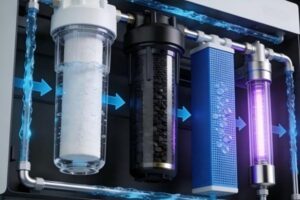
The most effective overall combination is a PP sediment filter, followed by an activated carbon filter, then a Reverse Osmosis membrane, and finished with a UV sterilizer. This sequence removes particles, chemicals, dissolved contaminants, and pathogens for complete water safety.
Building a Synergistic System
This isn’t just a list of parts; it’s a process. Each stage prepares the water for the next. The sediment filter protects the carbon. The carbon removes chlorine that would damage the RO membrane. The RO removes most everything else. The UV provides a final disinfection guarantee.
| Stage | Filter | Primary Target | Benefit to Next Stage |
| 1 | PP Sediment | Dirt, sand, rust | Prevents clogging of carbon filter. |
| 2 | Activated Carbon | Chlorine, chemicals, odors | Protects the delicate RO membrane from chlorine damage. |
| 3 | RO Membrane | Metals, salts, viruses, bacteria | Produces nearly pure water, removing most contaminants. |
| 4 | UV Sterilizer | Any remaining bacteria/viruses | Adds a final, chemical-free safety step for potable water. |
This layered approach is what professionals like Phil look for. It’s efficient, reliable, and each component’s job is clear. It avoids the pitfall of overloading a single filter. When sourcing systems, this is the proven architecture I stand behind for consistent, high-quality results.
Choosing effective filters means understanding their specific roles and combining them in the right order for clean, safe, and great-tasting water.