What Makes the Best Off-Grid Home Water Filtration System?
Living off-grid means taking full control of your water supply. The initial excitement can quickly turn to worry when you realize the responsibility of ensuring every drop is safe. But what if you could build a system that’s both reliable and simple to manage? A layered filtration approach solves this by tackling different contaminants step-by-step.
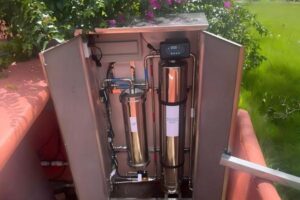
The best off-grid water filtration system is a multi-stage setup tailored to your specific water needs. It typically starts with a sediment pre-filter, followed by a main purification technology like Reverse Osmosis or Ultrafiltration, and finishes with UV sterilization for pathogens and an activated carbon filter to improve taste. This combination ensures comprehensive water safety without relying on municipal infrastructure.
Choosing the right components might seem complex, but it all starts with one fundamental question. Let’s break down exactly what you need to consider to build your ideal system.
Why is Defining Your Water Usage the First Critical Step?
Many off-grid homeowners make the mistake of over-filtering their water. This leads to unnecessary expense and maintenance. Wasting resources on ultra-pure water for tasks like watering plants is a common frustration. The solution is to clearly separate your water needs by purpose from the very beginning.
Your water usage dictates the filtration level required. For non-potable uses like laundry, cleaning, and irrigation, basic sediment filtration is often sufficient. For drinking, cooking, and bathing, you need a more advanced system that includes purification and disinfection to protect your health.

Matching Filtration Levels to Your Actual Needs
Getting this step right prevents you from buying more system than you need. I learned this firsthand in my early days on the production line. We once built an overly complex, expensive unit for a client who only needed to filter water for their garden. It was a waste of their money and our engineering. This experience cemented my belief in a needs-first approach. Let’s categorize the requirements.
| Water Use Scenario | Required Filtration Level | Recommended System Core |
| Drinking & Cooking | Highest Purity | Reverse Osmosis + UV + Carbon |
| Showering & Bathing | Pathogen & Chlorine Removal | Ultrafiltration + Carbon |
| Laundry & Cleaning | Sediment Removal | Sediment Pre-filter only |
| Garden Irrigation | Basic Debris Removal | Simple Screen Filter |
This table shows that a one-size-fits-all approach doesn’t work. For a holistic home system, many people install a main sediment pre-filter for the entire water inlet. Then, they branch off to a high-purity under-sink system just for the kitchen tap. This is both cost-effective and efficient.
What Are the Essential Components of a Complete Off-Grid System?
A common pitfall is installing a single filter and hoping for the best. This creates a weak link, leaving your water vulnerable to different types of contaminants. The anxiety of unknown bacteria or chemicals in your glass is unsettling. A layered defense strategy solves this by assigning a specific role to each component.
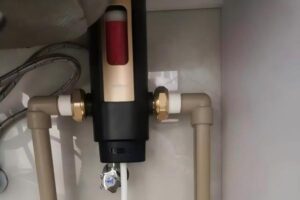
A complete off-grid system has four key components: a pre-filter for large particles, a main filter (RO or UF) for fine contaminants, a UV sterilizer to kill microorganisms, and a final activated carbon filter to remove odors and improve taste. This multi-barrier approach guarantees water safety and quality.
The Non-Negotiable Layers of Protection
Think of these components as your water’s personal security team. Each one has a specialized job. As an engineer who has torn down hundreds of systems, I can tell you that the most reliable brands always use this layered philosophy. It’s not just about adding parts; it’s about creating a seamless process.
| System Component | Primary Function | Why It’s Essential |
| Pre-filter | Removes sand, rust, silt | Protects downstream filters from clogging and damage. |
| Main Filter (RO/UF) | Removes dissolved salts, viruses, bacteria | Provides the core purification for safe drinking water. |
| UV Sterilizer | Destroys bacteria and viruses | Adds a crucial chemical-free disinfection step. |
| Activated Carbon | Removes chlorine, improves taste & smell | Creates palatable, great-tasting water. |
The pre-filter is the first line of defense, catching the big stuff. The main filter, whether RO or Ultrafiltration, does the heavy lifting of purification. UV light then ensures any living organisms that slipped through are neutralized. Finally, the carbon polisher makes the water taste clean and fresh. Skipping any one of these stages creates a vulnerability in your system.
How Do You Choose Between Reverse Osmosis and Ultrafiltration?
The choice between RO and UF can be paralyzing. Sales pitches are full of technical jargon that obscures the real-world impact. Making the wrong choice could mean your system can’t handle your water’s specific contamination profile. Cutting through the hype to find the right core technology is simpler than it seems.
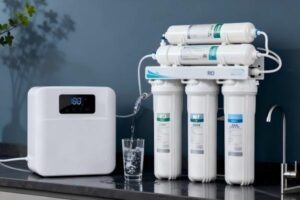
Choose Reverse Osmosis (RO) if you need to remove dissolved solids like salts and heavy metals, achieving the highest purity. Choose Ultrafiltration (UF) if your main concern is bacteria and viruses, and you want a system that works without electricity and has no wastewater.
A Practical Guide to Core Technologies
This decision is not about which technology is “better,” but which is better for you. I’ve seen buyers like Phil spend days comparing spec sheets. My advice is to look at your water source. Is it a relatively clean spring, or a questionable well with high mineral content? Your source gives you the answer.
| Consideration | Reverse Osmosis (RO) | Ultrafiltration (UF) |
| Filtration Level | 0.0001 microns (Removes almost everything) | 0.01 microns (Removes pathogens & colloids) |
| Removes Dissolved Salts? | Yes | No |
| Electricity Required? | Often yes (for booster pump) | No |
| Wastewater Produced? | Yes (requires drainage) | No |
| Best For | Water with high TDS, salt, or metal content | Good-quality source water with microbial risk |
RO is the gold standard for purity but comes with trade-offs: it needs water pressure (often from an electric pump) and produces concentrate water. UF is a brilliant, low-maintenance solution for water that is already relatively clear but may contain harmful microorganisms. It works with simple gravity feed, making it superb for truly remote locations.
What About Convenience and Final Taste?
After ensuring safety, you’re left with water you have to live with every day. There’s nothing more disappointing than water that is safe but tastes flat or smells odd. This final step is often overlooked, but it’s what turns treated water into water you truly enjoy drinking.
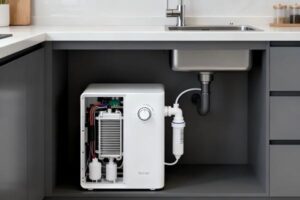
For ultimate convenience and perfect taste, consider adding dedicated point-of-use systems. A under-sink RO unit with a built-in heater and chiller provides instant hot and cold purified water. A final activated carbon filter is essential for removing any residual tastes and creating crisp, refreshing water.
The Final Touch: From Pure to Perfect
This is where engineering meets daily life. The best filtration system is one you actually use and enjoy. A wall-mounted or under-sink unit that heats and cools is a game-changer for making tea, coffee, or a cold drink instantly. The carbon filter is the final polish, much like a finishing touch on a piece of craftsmanship. It ensures the water not only is pure but feels pure when you drink it.
Building a reliable off-grid water system is a logical, step-by-step process that starts with understanding your needs and ends with enjoying safe, great-tasting water every day.